



Lives in: Praia, Cape Verde
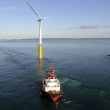
Cape Verde has taken a historic step toward transforming its energy future with the launch of the nation’s first deep-ocean floating wind turbine, now undergoing full-capacity testing 14 kilometres off the coast of São Vicente. The project, backed by a coalition of European climate-tech investors, marks the beginning of what the government hopes will become Africa’s first fully ocean-powered micro-state.
A Landmark Achievement for a Small Island Nation
For decades Cape Verde has battled high electricity costs, heavy fuel import dependence, and climate-induced droughts. The new turbine — standing 182 metres tall with advanced stabilisation anchors — is designed to capture powerful mid-Atlantic wind currents, generating up to 11.4 megawatts of clean power.
Energy Minister Paulo Veiga said:
“Cape Verde cannot rely on fossil imports forever. This turbine is our statement to the world — that small nations can lead big revolutions.”
Government officials say if testing succeeds, the country will deploy six additional floating turbines by 2027, aiming to produce 70% renewable energy nationwide.
How the Technology Works
Unlike land wind farms, deep-ocean turbines require no seabed drilling. They float on reinforced platforms and are tethered by eco-friendly anchors that preserve marine life while capturing stronger offshore winds.
Project engineers report excellent early performance, with stable energy output and minimal noise impacts on marine ecosystems.
Lead engineer Dr. Ana Mendonça noted
“The Atlantic winds here are reliable and strong enough to power Cape Verde without harming surrounding biodiversity.”
Economic & Social Impact
The project is expected to reduce electricity bills by up to 22%, create 600 technical jobs, and position Cape Verde as a hub for ocean-energy research. Tourism operators also predict a rise in eco-tourism as visitors come to witness the floating-wind technology.
Local resident Carla Rodrigues added:
“For the first time, we feel like the future is shifting. Clean energy means more jobs
Challenges Ahead
Experts warn the country must invest in energy-storage facilities and storm-resilient infrastructure to prevent disruptions during hurricane-season swells. Still, environmental groups have praised the project as one of Africa’s boldest sustainability steps this decade.
Cape Verde now joins the global league of nations experimenting with deep-sea wind power — and if successful, it may become the continent’s first 100% clean-energy island chain.


